
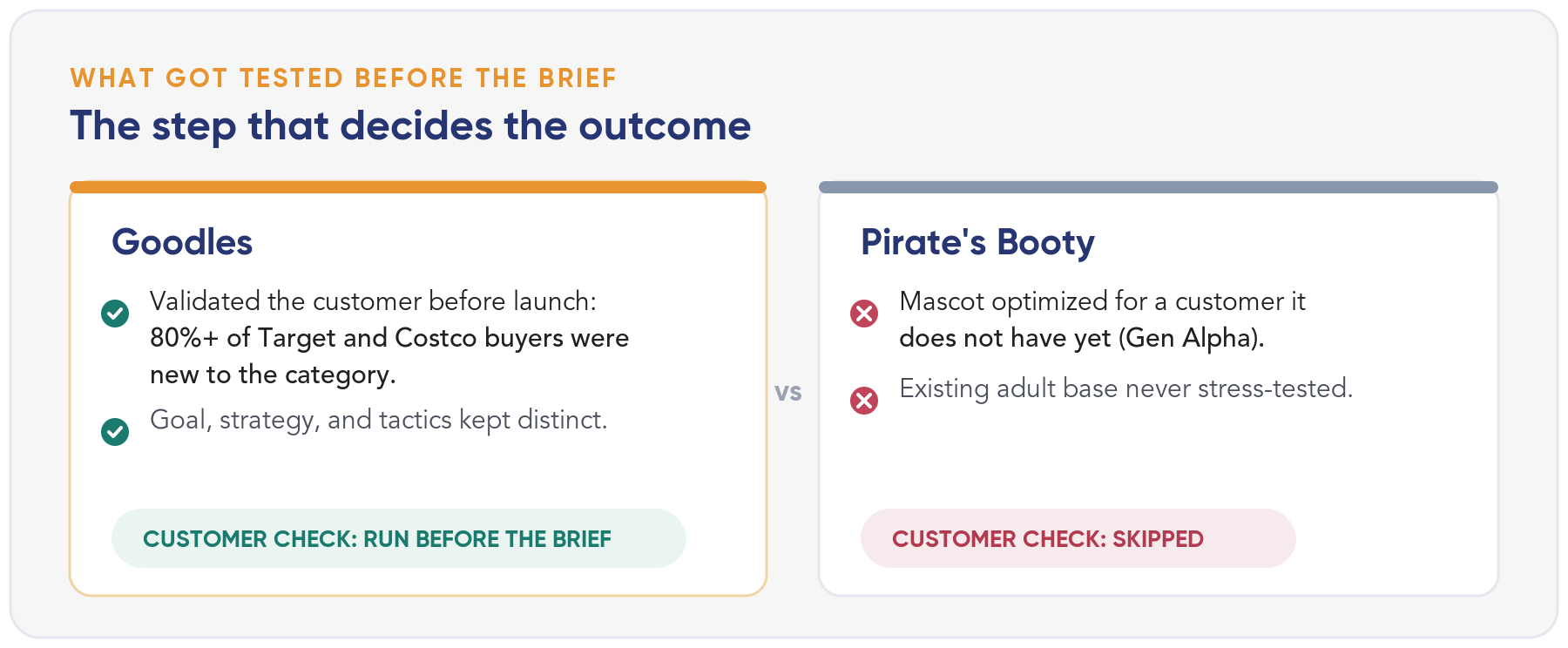
Goodles and Pirate's Booty read the same wellness moment and made opposite bets. Goodles validated its customer before launch, more than 80% of its Target and Costco buyers were new to the category, and now sells a box of mac and cheese every second. Pirate's Booty redesigned its mascot for a Gen Alpha customer it does not have yet and drew backlash from the adult fans it already had. The difference was a customer-stage check run before the creative brief, the step a 5 Cs or GSTIC pass exists to force.
Goodles sells a box of mac and cheese every second. Pirate's Booty just relaunched into backlash from its own fans. Both bets came from the same read on the market, the same wellness moment, the same appetite to look less like a legacy brand. The difference isn't taste or timing. It's what got tested before launch instead of after.
I've got a six-year-old, so I'll be honest, I have opinions about both of these brands that have nothing to do with marketing theory. Goodles shows up in our cart because the flavors are genuinely funny ("Shella Good" is the one we actually buy), and Pirate's Booty has been a staple lunchbox snack since before my kid could talk. When I asked my wife why she picked Goodles up in the first place, she didn't mention the fiber or the protein. She said she liked the branding, it looked more foodie, more gourmet, sitting on the shelf next to the usual boxes. That's the whole Company insight in one grocery run: the packaging did the selling before the nutrition panel ever got read. So when the Pirate's Booty redesign hit and parents I actually know started grumbling about it, that wasn't an abstract case study to me. It was a firsthand read on what happens when a brand rewrites the packaging for a kid it doesn't have yet, and forgets about the parent already buying it.
Goodles: a point of view locked before a single asset
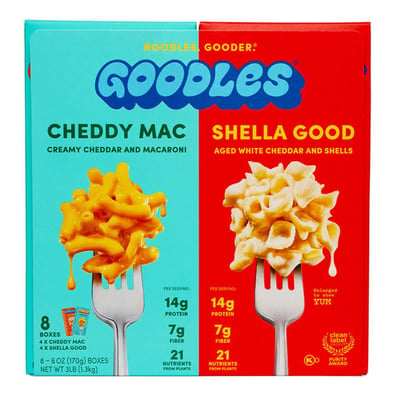
Goodles built its whole identity on being the weird kid in a sleepy aisle, and the strategy behind that is well documented, not just a vibe. Founder Jen Zeszut and co-founder Paul Earle, a former Kraft brand manager, launched Goodles in 2020 after concluding the health revolution had not yet reached boxed mac and cheese, packing the product with fiber and protein while keeping flavors playful. Zeszut has said the "weird" isn't decoration, it's the only lane available: since legacy players like Kraft or General Mills can never credibly look raw, scrappy, or weird, Goodles decided to out-joy and out-weird them instead of competing on their terms. That's exactly the kind of finding a Goal, Strategy, Tactics pass is built to surface before a single asset gets designed. Goal: category disruption, not incremental share. Strategy: lean into a constraint Kraft and General Mills can't escape. Only once that was locked did tactics, packaging, voice, flavor names, get built to express it. Zeszut also treated the positioning as a retail argument, not just a brand voice: at Target and Costco, more than 80% of Goodles buyers said they'd never bought mac and cheese at those stores before, which let the brand tell retailers it would bring in new category dollars rather than just steal existing Kraft or Annie's revenue. That's a customer insight validated before launch, not discovered after one, and it shows. Goodles is now growing more than 10 times faster than its category, outperforming sector giants in dollar velocity, and it sold a box every second in 2024 on the back of triple-digit growth.
Pirate's Booty: a sound read, aimed at a customer it does not have yet
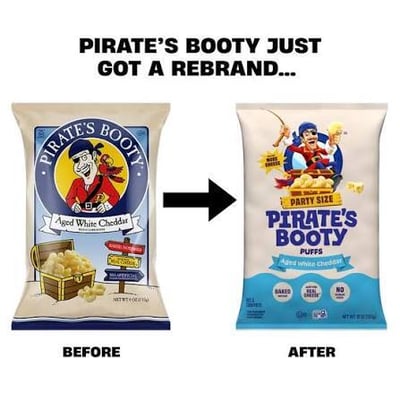
Pirate's Booty, owned by Hershey alongside SkinnyPop, took a different bet. Worth being precise here, because it wasn't the strategy-free facelift it looks like from the outside. According to Eric Bowers, Hershey's VP of marketing for Salty Snacks, this redesign marks the brand's first major marketing investment push from Hershey in several years, arriving alongside new partnerships, product innovation, and real-world and social activations. The timing read was sound: wellness culture and a federal push against artificial dyes have PepsiCo, Welch's, and Kraft Heinz all racing to reformulate around fewer additives, with Lay's and Tostitos already having rebranded to foreground real ingredients, and Bowers called this the "most opportune time" for Pirate's Booty to reassert itself as a better-for-you option in the chip aisle. The mascot redesign had its own logic too. Pearlfisher's executive creative director Matt Sia said the old Captain Bob was contained within a round, blue central shape, and the goal was to free him into the environment as a larger-than-life character who could interact with the product and show up across social media and in-person activations.
The step that got skipped: a customer-stage stress test
Both of those are real insights. What's missing is the step that should've come before either one got greenlit: a customer-side stress test of who actually carries the brand's equity today versus who it's trying to acquire tomorrow. Sia and Bowers were explicit that freeing Captain Bob and Crunch was intended to bring a new generation of fans, meaning the design decisions optimized for a customer Pirate's Booty doesn't have yet. Run that goal against the existing customer base with the same rigor Goodles applied to its retail pitch, and the tension surfaces immediately. The backlash landed almost entirely on the customer they already had, not the one they were chasing. Early reaction, mainly from adult fans of the original branding, was lackluster, with some calling the new mascot art "AI-generated" even though the design team confirmed no AI-generated imagery was used. That last bit stung to read as a parent. Nobody in my group chat thought the art looked like AI slop because it was badly drawn. They thought it because Captain Bob suddenly looked like a character none of us grew up trusting, and that's a brand feeling, not a technical one. Sia's own framing captured the mismatch without fully resolving it: any brand change will draw a reaction, especially from people in the design world who have their own ideas of how they'd have solved it, and the priority is figuring out what's best for consumers and what people are actually looking for. Whose "looking for" gets weighted is exactly what a customer and company diagnostic, run before execution, is supposed to force into the open.
Both brands through the 5 Cs framework
Run both through the 5 Cs framework and the difference isn't subtle.
Company
Goodles had a clear point of view walking in: be the brand that makes fun of the category. That point of view had a specific target, the one place incumbents structurally can't follow, since Kraft and General Mills can never credibly look raw, scrappy, or weird without breaking their own brand equity. Pirate's Booty had a point of view too, just aimed at the wrong horizon: Gen Alpha acquisition and a mascot built for social and IRL activations. Legitimate growth goal, but it skipped the space sitting right in front of it. Pirate's Booty already had real cheddar and a short ingredient list before "clean label" became a category-wide scramble. That's the incumbent's blind spot, and a GSTIC pass at the strategy stage would have flagged that the ingredient story, not the mascot, was the more defensible place to spend the brief. It's also worth knowing what shape the business was actually in walking into this. Pirate's Booty had been the one laggard in Hershey's salty snacks portfolio, with market share roughly flat since Hershey acquired it in 2018, but by the quarter right before the rebrand, retail sales had turned around, up about 3% and marking a second straight quarter of growth off increased distribution and in-store programming. That changes the read on the Company stage: this wasn't a brand in freefall taking a swing to survive, it was a brand that had just found its footing again, raising the brief's odds of stability, and its stakes if the new mascot alienated the base that had just started buying more.
Customers
This is where it really splits, and it's the crux of the whole story. Goodles' audience wants a category disruptor and was primed to reward one, but Zeszut didn't treat that audience as separate from the business case. The finding that more than 80% of Goodles buyers at Target and Costco had never bought mac and cheese there before became her literal pitch to retailers: keep your existing Kraft and Annie's revenue, and we bring in dollars you never had. That's growth that adds a new customer without asking an old one to pay for it. Pirate's Booty has two audiences that don't want the same thing: the Gen Alpha parents Hershey was designing for, and the adult fans (myself included) who grew up with Captain Bob and weren't part of the target brief at all. No equivalent version of the Goodles math got run here. A mascot can flex for social content without erasing the version millennial parents grew up on. Hershey optimized for the customer it doesn't have yet and let the customer it already has absorb the cost, a gap a customer-stage diagnostic exists specifically to catch.
Competitors
Goodles is fighting Kraft's inertia; being loud is itself the competitive move. Pirate's Booty's actual competitive read was sharp: wellness culture and the anti-dye push have Lay's, Tostitos, Welch's, and Kraft Heinz all racing to look more "real." Pirate's Booty had a genuine head start there. The competitive insight wasn't the weak link. The mascot execution is what took the hit.
Collaborators
Same agency behind both redesigns, Pearlfisher, fresh off a SkinnyPop refresh that landed fine. Should sting a bit for anyone leaning on "we hired the right team" as the whole strategy. Pearlfisher solved the brief they were given, freeing Captain Bob from a static roundel into a flexible, social-ready character. The brief itself needed the stress test against the existing fan base before it ever reached the agency, not the execution against it.
Context
Goodles launched into a moment where less-produced, more-human content is beating glossy brand work on engagement, and it kept its goal and its tactics distinct rather than asking one move to do both jobs. Pirate's Booty launched into the same moment from the other side: a real strategic reason to move on ingredients, collapsed into a single packaging decision that had to win or lose for two different audiences at once. The audience actually reading it as it landed was the nostalgic one, not the Gen Alpha one Hershey was courting, and that audience judged the new mascot art as less human, not more relevant.
Does the backlash actually cost money? Three histories
Real damage versus perceived damage. My wife's reaction to the redesign wasn't really about the artwork. She's not judging the new Captain Bob on aesthetics, she's against it on principle. She used the word "betrayal," which is a strong word for a snack aisle decision, and it's worth taking seriously, because the research on backlash suggests her kind of reaction, loud, principled, unnecessary, is exactly what determines whether a rebrand turns into a real financial event or just a noisy week online.
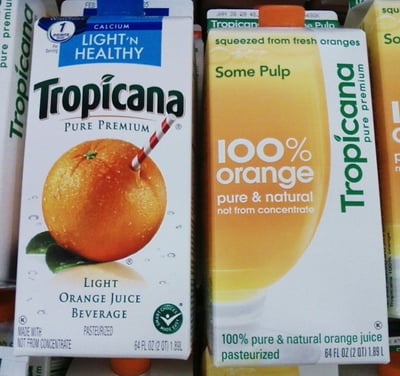
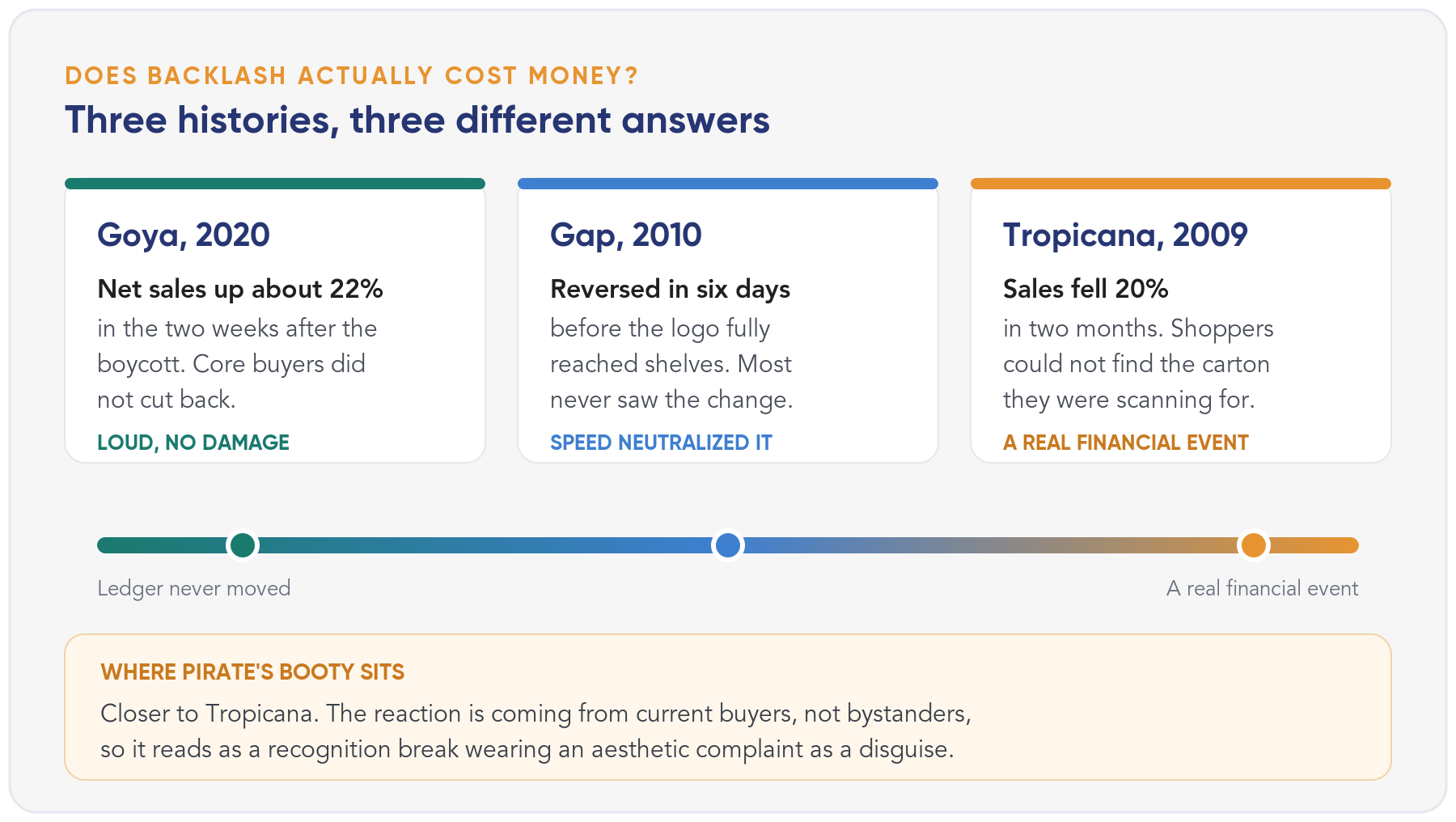
History gives three different answers to whether backlash actually costs money. Tropicana's 2009 redesign is the case where it was real: shoppers didn't recognize the new packaging in stores, sales fell 20% in two months, and tens of millions were lost across production, marketing, and goodwill before the redesign got pulled. That wasn't outrage converting into lost sales on its own. It was outrage plus a functional failure, shoppers navigated the shelf by scanning for the orange-and-straw image, and once it disappeared, they grabbed a different carton out of habit. The backlash was a symptom of a real recognition problem, not the cause of the loss.
Gap's 2010 logo is the case where the backlash mostly stayed perceived. The uproar was instant and vicious, but Gap reversed course in six days, before the redesign had fully reached shelves or campaigns, and the speed of that reversal meant many people hadn't even noticed the change before it was gone again, sparing Gap the sales slump a slower response would have caused. The lesson isn't that backlash doesn't matter. It's that speed decides whether sentiment ever converts into an actual number on a P&L.
Goya is the case that should make any brand question the assumption entirely. When Goya's CEO praised Trump in 2020, a boycott movement dominated social media, loud, sustained, heavily covered. The purchase data told a different story. Academic research using consumer purchase data found Goya's net sales rose by about 22% in the two weeks after the controversy, and Latino consumers, the brand's core base, did not significantly reduce their purchases. The boost faded within three weeks, but there was no boycott damage to fade from in the first place. The backlash was loud, and the ledger never moved.
| Rebrand | What the backlash signaled | Sales outcome |
|---|---|---|
| Tropicana, 2009 | A real recognition break, shoppers could not find the carton they scanned for | Sales fell about 20% in two months, and the redesign was pulled |
| Gap, 2010 | Loud sentiment, caught before the logo reached shelves | Reversed in six days, most shoppers never noticed, no lasting hit |
| Goya, 2020 | Sentiment volume from people who were not going to change their behavior | Net sales rose about 22% in two weeks, and core buyers did not cut back |
So the honest answer is that it depends on whether the backlash is standing in for a real functional or emotional break, Tropicana's shelf-recognition problem, or whether it's sentiment volume from people who were never going to change their behavior anyway, Goya's pattern. Pirate's Booty sits closer to Tropicana than Goya. The reaction isn't noise from people with no stake in the brand, it's coming from parents like my wife, the actual current buyers, responding to a mascot that no longer signals what they trust. That's a functional break in recognition, wearing an aesthetic complaint as a disguise. Whether it shows up in a real sales number the way Tropicana's did, or fades the way Goya's did, probably comes down to one thing: whether Hershey treats this like a six-day Gap problem, or lets it sit long enough to become a Tropicana one.
The honest caveat: we do not have the number yet
Here's the honest caveat: we don't actually have that number yet. Hershey told investors in its Q1 2026 call that the updated Pirate's Booty packaging and media were expected to accelerate consumption starting in Q2, the same quarter the redesign hit shelves, but the earnings report that would show whether that happened, or whether the backlash dented it instead, hasn't been published as of this writing. That's the actual answer to "is there real loss," it's not yet knowable from the outside, and anyone claiming certainty about Pirate's Booty's fate right now is guessing. The honest move is to watch Hershey's next couple of earnings calls the way you'd watch Tropicana's or Goya's after the fact, rather than assume backlash volume already told the story.
The takeaway: run the diagnostic before the brief
The takeaway isn't "bold good, safe bad," and it isn't "no strategy" either. Pirate's Booty had a documented company goal, a real competitive insight, and a design rationale that made sense in a vacuum. What it didn't have was a customer-stage check run with the same discipline Goodles applied to its own pitch, the step in a GSTIC or 5 Cs pass that exists precisely to catch a plan that's internally consistent but externally mismatched. As a parent watching both of these play out up close, that's the whole difference between a rebrand that reads as courage and one that reads as an unforced error: whether the diagnostic happened before the brief was written, or got skipped in favor of moving fast.
Sources
- Fast Company, "Yes, that Pirate's Booty rebrand is real," June 9, 2026. Hershey and Pearlfisher rationale, quotes from VP of Marketing Eric Bowers and Pearlfisher ECD Matt Sia.
- Inc., "To Compete for Crowded Shelf Space, Goodles Founder Jen Zeszut Dials Up the 'Weird,'" April 21, 2025. Founding strategy, retailer pitch, and growth figures.
- Adweek, "The Goodles Approach to Category Disruption," category growth-rate data.
- The Drum, "Top 10 rebrands that backfired: Lessons from Cracker Barrel, Gap and more," Tropicana sales-drop figures.
- The Branding Journal, "Learning from the Gap Logo Redesign Fail," Gap reversal timeline.
- Cornell University, "Social media boycott of Goya did not harm sales," summarizing Tuchman, Liaukonyte, and Zhu, "Spilling the Beans on Political Consumerism," Marketing Science, 2022.
- Food Dive, "Behind Hershey's 'big bet' on salty snacks," Pirate's Booty's flat market share history within the Hershey portfolio.
- PR Newswire, "Hershey Reports Fourth-Quarter and Full-Year 2025 Financial Results," February 5, 2026. Pirate's Booty Q4 2025 retail sales growth.
- The Hershey Company, First Quarter 2026 Earnings Call transcript, April 30, 2026. Management commentary on expected Q2 impact of the Pirate's Booty relaunch.