

A color analysis prompt went viral this spring, and most brands missed what actually happened inside those conversations.
The prompt itself was simple enough:
"Create a personal color analysis graphic using the attached selfies. Show side-by-side clothing color comparisons to highlight which colors suit me best. Make it visual-first, with short labels only and no paragraphs."
People uploaded selfies. ChatGPT returned personalized palettes, flattering shades, and colors to avoid. The results were accurate, shareable, and they spread fast.
But after generating the color analysis, ChatGPT didn't stop. It offered to build a Spring/Summer 2026 shopping list from Zara, Aritzia, Mango, Nordstrom, and others, with specific products, prices, styling rationale, and links, all without leaving the conversation.
-1.png?width=715&height=1073&name=Untitled%20design%20(1)-1.png)
The color analysis was the hook. What happened next was a shopping conversion, completed before a single brand's website was ever visited.
This interaction has a name, and understanding it matters before we get into what it means for brands.
AI-Mediated Commerce: A shopping journey that starts, develops, and sometimes closes inside a chat window. No search bar, no ad click required. The AI infers what you need from context and surfaces options before you've consciously decided you're shopping.
This isn't a future scenario. I watched it happen in a single session. And it isn't limited to retail: the same pattern applies to any category where a high-context question precedes a purchase decision: B2B services, healthcare, and financial products.
What the Viral Prompt Actually Demonstrated
The prompt itself was fun. What happened next is what I couldn't stop thinking about.
In a single session, I received personalized insights and a curated product shortlist. No search bar, no category page, no ad. This is what conversational commerce can look like when it works: a model that understands a personal need, connects it to product attributes, and moves toward conversion, all within the same conversation that created the need in the first place.
Not every interaction looks like this yet. But enough of them do to signal where this is heading. And importantly, this isn't limited to retail. The same pattern of AI inferring intent from context applies equally to B2B services, healthcare, and any category where a high-context question precedes a purchase decision.
This also isn't niche behavior. According to a 2025 IAB study, AI is the second most influential shopping source among consumers, behind only search engines and ahead of retailer websites, apps, and even recommendations from friends and family. Nearly 90% of shoppers say AI has helped them discover products they wouldn't have found otherwise.
Intent is forming somewhere new. Most brands aren't there yet.
Three Things This Moment Reveals About AI Shopping
1. The Intent Signal Has Moved Upstream of the Search Bar
In traditional e-commerce, intent is expressed through a search query. The user knows what they want, types it in, and the engine matches supply to demand.
In my ChatGPT session, the AI generated the intent. At the start of our conversation, shopping wasn't my goal. The color analysis created the insight ("I'm a Soft Summer"), and the AI translated that insight into a product need: "You need dusty mauves and slate blues; here's where to find them." Intent was inferred and acted on before I'd consciously formed it, and the session converted before I reached any brand's owned property.
The implication: Brands that optimize exclusively for search intent aren't optimizing for the full journey anymore. The AI is designing the journey from the beginning.
2. Product Recommendations Were Won in the Catalog, Not the Ad Auction
Look at which brands appeared in the shopping output: Aritzia, Banana Republic, Nordstrom Rack. No paid placement. No keyword bid won. They appeared because their product data was legible to the model.
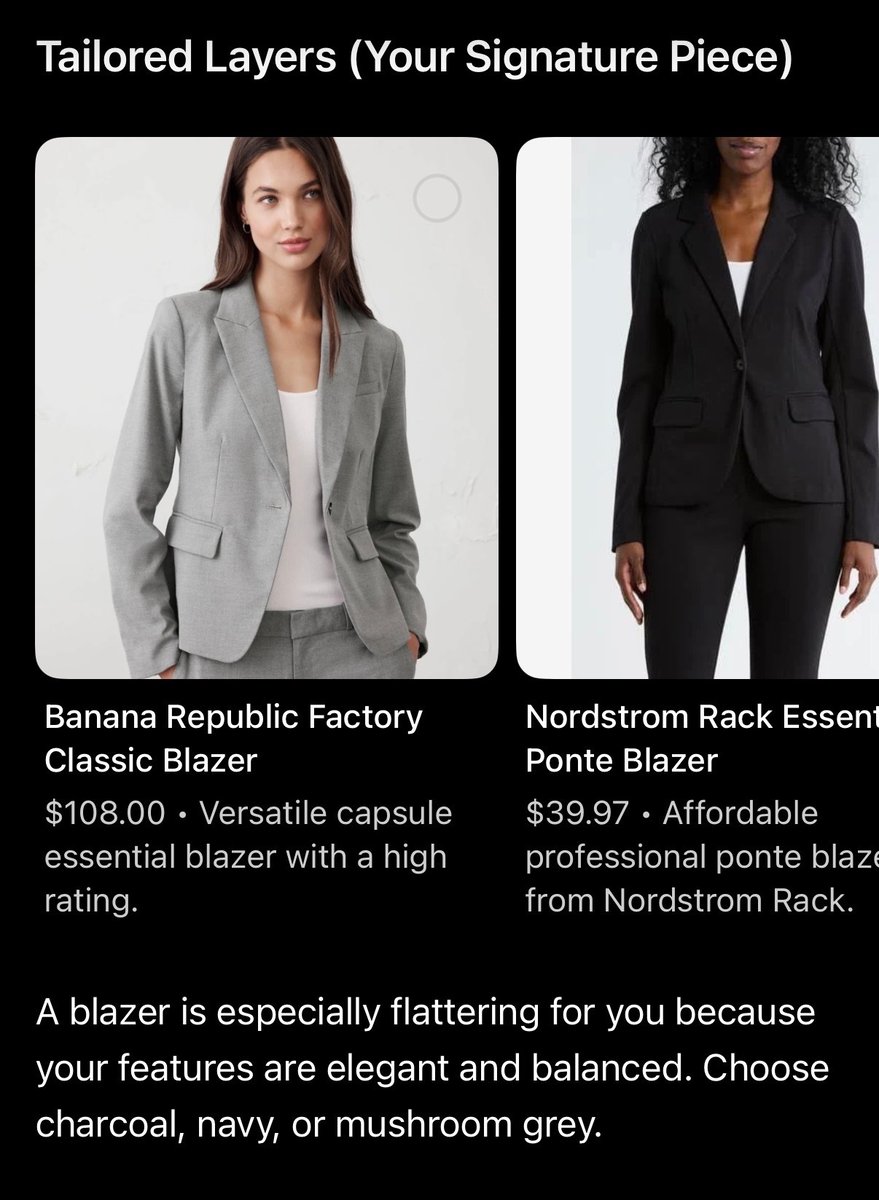
ChatGPT didn't search for "slate blue sweater." It matched a semantic concept (cool undertones, soft texture, muted palette, versatile layering) against the product language available to it. Brands whose catalogs use precise, sensory, contextually rich descriptions aligned with how the AI understood "Soft Summer." This was a mix of distribution reach, brand presence, and product data quality. That's why retailers with strong, well-described catalogs tend to surface more consistently.
The implication: Product data quality is now a channel. Brands treating their catalog descriptions as an afterthought are essentially opting out of AI commerce.
3. The Consideration and a Meaningful Part of the Decision Happened Inside the Conversation
In traditional e-commerce, traffic is the primary goal. Every channel (paid search, paid social, SEO, email) exists to move users to a brand-owned destination where the sale closes.
-1.png?width=771&height=1157&name=Untitled%20design%20(2)-1.png)
In this session, I visited Aritzia.com only to complete the purchase. The recommendation, product selection, and purchase intent were formed and nearly resolved inside ChatGPT. The brand's owned channel shifted from a discovery surface to a trust-and-conversion validation hub.
That doesn't mean the entire journey stays in the AI interface. People still verify prices, check fit guides, read reviews, look at return policies, and open extra tabs before buying. But the funnel has a new option for where it starts.
Strategic Implications for Brands and Retailers
How Do You Get Your Products into AI-Generated Recommendations?
The entry point is product data quality, alongside (not instead of) traditional levers like ad spend. AI shopping recommendations are generated by matching semantic concepts to product attributes. Brands that use rich, specific, contextually accurate language in their product descriptions (color temperature, fabric feel, occasion, styling context) are more matchable.
This isn't a one-time copywriting update. It requires reclassifying the product catalog with AI legibility as an explicit goal. That's a real investment in data and labor, particularly for mid-market and smaller brands. But the cost of being invisible to the AI consideration set will ultimately be higher.
How Do You Build the Kind of Brand Authority AI Systems Cite?
AI models don't recommend brands they don't recognize. In this context, trust is built through third-party citation: editorial coverage, structured reviews, inclusion in curated lists, and authoritative brand references in publications that LLMs draw from.
Brands with strong AI visibility tend to have diverse citation profiles: industry roundups, independent editorial coverage, structured directories, and a consistent peer-review presence. Brands that exist primarily in paid placements or on their own properties are harder for AI to verify and, therefore, harder to recommend.
That's what AEO is: making your brand something AI systems want to cite. The behaviors are forming in real time. During the 2025 holiday season, AI-influenced interactions accounted for nearly 20% of retail sales, approximately $262 billion. The brands building toward AI visibility now are the ones that will hold the positions that compound as the behavior scales.
Wondering where your brand stands in AI-generated recommendations? Let's talk about your AEO strategy.
Frequently Asked Questions
What is AI-mediated commerce?
AI-mediated commerce refers to purchase journeys that originate and unfold within a conversational AI interface (ChatGPT, Gemini, Perplexity, Claude, or similar) rather than through a traditional search engine or a direct brand visit. The AI infers needs from context, matches them to product or service options, and presents recommendations within the conversation. The user may never initiate a search query or visit a brand's website during the process.
Why did some brands show up in the ChatGPT shopping output and not others?
The brands that appeared had product data that was semantically legible to the model. AI systems match product recommendations by parsing language: color descriptions, material attributes, occasion context, and styling relevance. Brands with precise, sensory, contextually rich product descriptions align more closely with how AI interprets user needs. Brands with minimal or generic descriptions ("blue top, size M") are harder for the model to match, regardless of brand awareness or ad spend.
Does paid advertising influence AI product recommendations?
Not directly. AI recommendation outputs are generated from training data and, in retrieval-augmented models, from real-time web sources. Paid ad placements don't appear in AI-generated recommendation lists the way they do in search results. Brand visibility in AI commerce is earned through product data quality, third-party citations, editorial coverage, and structured data. This is distinct from the evolving landscape of paid placements in AI search interfaces, which is a separate, emerging product category worth monitoring.
What is AEO (Answer Engine Optimization)?
AEO, or Answer Engine Optimization, is the practice of improving how prominently a brand appears inside AI-generated responses across platforms like ChatGPT, Gemini, Perplexity, and Claude. In a shopping context, AEO means ensuring your brand and products are cited, recommended, and positioned favorably when users ask AI systems for product guidance. It operates through product data structure, earned editorial authority, and consistent third-party citation.
How is AEO different from traditional SEO?
Traditional SEO optimizes for search engine rankings, specifically getting a page to appear on the first page for a given query. AEO optimizes for AI citation: getting a brand to appear in the AI's answer when a user asks for a recommendation. SEO rewards technical site structure and backlink authority. AEO rewards semantic richness in product data, the depth of third-party citations, and the consistency of brand mentions across the sources AI models draw from. Brands that have invested in content authority for SEO have a head start, but the catalog-level work required for AI shopping visibility is distinct.
Is AI-mediated commerce limited to retail?
No. The color analysis example is retail, but the underlying behavior (AI inferring a need and recommending a solution within a conversation) applies across categories. Service providers, B2B vendors, professional services, and healthcare organizations are all seeing purchase-intent journeys begin in AI chat rather than search. The stakes differ by category, but the structural shift is consistent: AI is increasingly the first touchpoint in a consideration journey, not the search bar.



RESPONSES